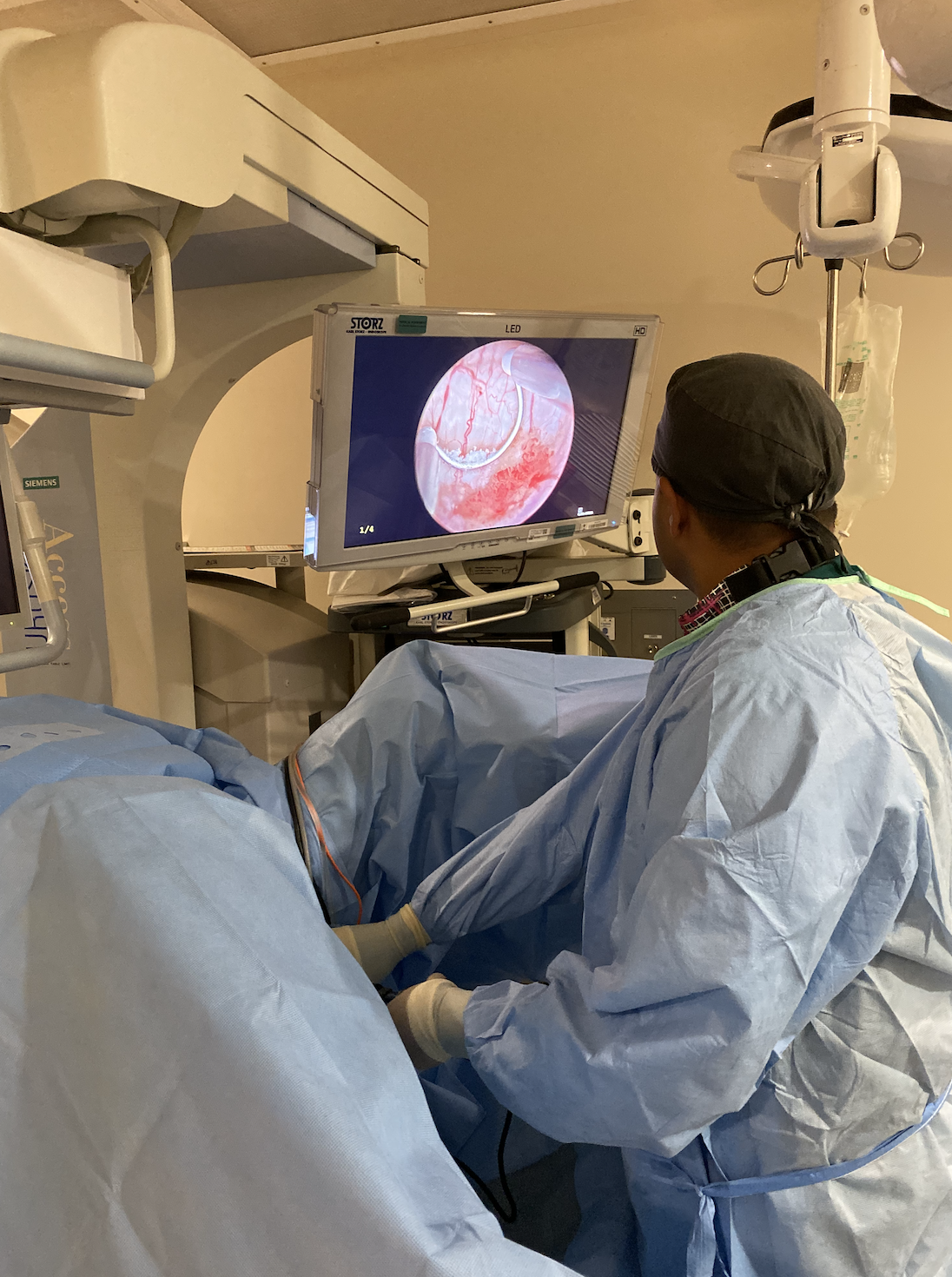
Image: UroJet, Wikimedia Commons, CC BY-SA 4.0.
Bipolar transurethral resection of the prostate (Bipolar TURP) is an endoscopic procedure used to remove obstructing prostate tissue in selected patients with benign prostate enlargement. The surgeon works through the urethra using a resectoscope and bipolar energy. A urologist can explain the expected benefits, risks and alternatives based on an individual assessment.
TURP helps reduce urinary symptoms caused by benign prostatic hyperplasia (BPH), including
TURP might also be done to treat or prevent complications due to blocked urine flow, such as: Recurring urinary tract infections
Prostate gland
It's not clear what causes prostate cancer. Doctors know that prostate cancer begins when some cells in your prostate become abnormal. Mutations in the abnormal cells' DNA cause the cells to grow and divide more rapidly than normal cells do. The abnormal cells continue living, when other cells would die. The accumulating abnormal cells form a tumor that can grow to invade nearby tissue. Some abnormal cells can also break off and spread (metastasize) to other parts of the body.

We must explain to you how all seds this mistakens idea off denouncing pleasures and praising pain was born and I will give you a completed accounts off the system and expound.
Consultation