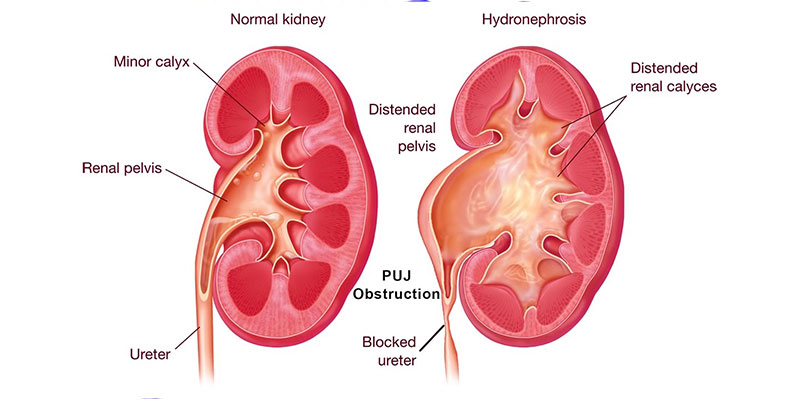
Some children are born with a condition called pelviureteric junction (PUJ) obstruction, which blocks the flow of urine from their kidneys to the bladder. Serious blockage can lead to a deterioration of the function in that kidney , so we asked consultant paediatric urologist Miss Marie-Klaire Farrugia how PUJ obstruction is diagnosed, and when surgery is considered as a treatment option.
Pelviureteric junction (PUJ) obstruction is most commonly due to a narrowing in the part of the ureter which drains urine from the kidney, causing a build-up of urine which then increases the pressure within the kidney - with the potential to cause damage.
PUJ obstruction is most often a congenital condition, occurring in 1 in 1500 births. It tends to affect the left kidney more than the right, but in 10% of cases it affects both kidneys.
What causes PUJ obstruction? PUJ obstruction can be:
It can be done by Laparoscopic and Open Pyeloplasty Surgery.

We must explain to you how all seds this mistakens idea off denouncing pleasures and praising pain was born and I will give you a completed accounts off the system and expound.
Consultation